Delivery trucks are now a constant presence on California roadways. From residential streets to major highways, commercial delivery vans from Amazon, UPS, and FedEx operate on tight schedules and high daily mileage. As delivery volume has increased, so have serious accidents involving pedestrians, cyclists, and other motorists.
When a delivery truck crash occurs, one of the most important questions is who can be held legally responsible. Liability rules differ dramatically depending on whether the driver is a company employee, a fleet operator, or a gig-style independent contractor. These distinctions are not always apparent to injured victims and are often intentionally blurred by large corporations.
Zinn Law Firm represents injury victims in San Francisco who have been harmed in commercial delivery van accidents and understands how corporate delivery models affect liability. Amazon, UPS, and FedEx use different delivery structures—Amazon, for example, uses Delivery Service Partners to limit responsibility.
Regardless, injured victims can pursue accountability under California law. Talk to a San Francisco Amazon delivery truck accident lawyer today if you think you have a claim. Our car accident attorneys can provide a free, confidential case evaluation today.
Takeaways for Liability Differences Between Fleet Trucks and Gig Delivery Drivers
- Liability after a delivery truck accident depends heavily on whether the driver is an employee or a gig contractor, which determines whether a large corporation can be held responsible.
- Fleet delivery companies like UPS often face direct responsibility for crashes because their drivers are employees operating company vehicles during assigned delivery routes.
- Amazon’s Delivery Service Partner model adds complications by separating drivers from Amazon, even though the company may still control routes, training, and performance standards.
- Proving corporate control can expand available insurance coverage, which is often necessary when injuries from commercial delivery van accidents are severe or long-lasting.
- Insurance limits for gig delivery drivers are often much lower than traditional fleet policies, increasing the risk that injury victims are undercompensated.
- If you suffered an injury in a delivery truck accident and questions exist about driver status or corporate responsibility, contact an auto accident attorney to protect your rights and pursue full compensation.
The Rise of Commercial Delivery Truck Accidents
Online shopping has transformed how goods move through cities. Same-day and next-day delivery demands have placed enormous pressure on delivery drivers to move quickly and complete hundreds of stops per shift. This environment increases the risk of distracted driving, unsafe parking, speeding, and fatigue.
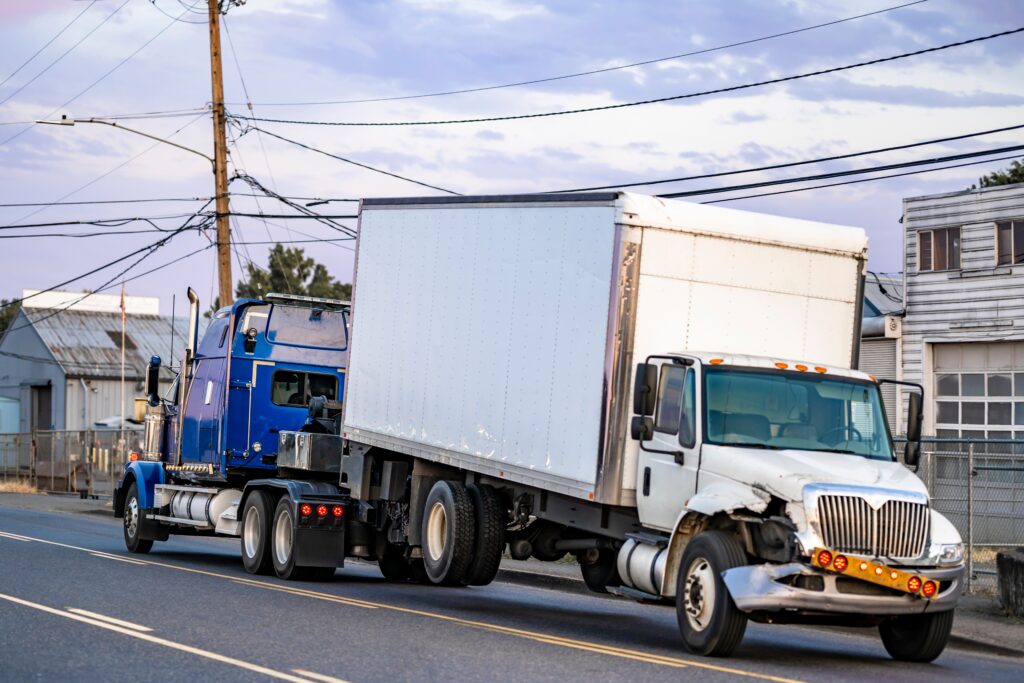
Delivery trucks are larger and heavier than passenger vehicles, which means crashes often result in severe injuries. Victims may suffer traumatic brain injuries, spinal injuries, fractures, and internal damage that require extensive medical care.
Understanding which company stands behind the driver is essential to determining whether a claim is adequately insured and who may be held legally responsible.
Traditional Fleet Models Versus Gig Delivery Models
UPS and FedEx largely operate under traditional fleet delivery models. Drivers are typically direct employees or operate under clearly defined corporate structures. Amazon, by contrast, uses a layered system designed to separate itself from direct responsibility.
This structural difference plays a central role in delivery truck accident claims.
UPS Delivery Drivers and Employer Liability
UPS drivers are generally direct employees of the company. They wear company uniforms, drive branded vehicles, follow company schedules, and operate under company supervision.
Liability in UPS Truck Accidents
Because UPS drivers are employees, the company can typically be held responsible for their actions while performing job duties. This principle is known as vicarious liability under California law.
If a UPS driver causes a crash while making deliveries, injured victims may pursue claims directly against UPS. These cases often involve substantial commercial insurance policies designed to cover serious injuries.
UPS accident claims tend to be more straightforward in terms of identifying responsible parties, though they still require careful investigation and documentation.
FedEx Delivery Structures and Liability Differences
FedEx operates under a mixed model. Some drivers are employees, while others operate through contracted delivery routes. The level of company control over the driver often determines liability.
Employee Versus Contractor Issues at FedEx
When FedEx exercises significant control over how deliveries are made, courts may treat drivers as employees for liability purposes. When control is more limited, FedEx may argue that the driver was an independent contractor.
Determining liability in FedEx delivery van accidents requires examining contracts, training requirements, route control, vehicle branding, and supervision practices.
Amazon’s Delivery Service Partner Model Explained
Amazon uses a system called Delivery Service Partners (DSPs). Under this model, Amazon contracts with small companies that hire drivers to deliver Amazon packages using Amazon-branded vans.
From the outside, these vans look like Amazon delivery trucks. Drivers wear Amazon uniforms, use Amazon apps, and follow Amazon delivery metrics. However, Amazon claims the drivers work for independent DSP companies, not Amazon itself.
This structure is designed to shield Amazon from liability in the event of crashes.
Why Amazon DSP Accidents Are Legally Challenging
Amazon DSP accidents are among the most challenging commercial delivery van accident cases. Amazon often argues that it cannot be held responsible because a separate business entity employed the driver.
Victims are frequently told they must pursue claims only against the DSP, which may have limited insurance coverage and assets.
However, California law allows courts to look beyond labels and examine the true nature of the working relationship.
Piercing the Contractor Veil in Amazon DSP Cases
California courts analyze whether a worker is truly an independent contractor or functions as an employee. Factors include:
- The degree of control Amazon exercises over delivery schedules
- Route assignments and performance metrics
- Mandatory training and operational rules
- Use of Amazon-branded vehicles and equipment
- Termination authority and discipline policies
When Amazon controls how deliveries are made, how drivers are evaluated, and how routes are completed, courts may find that Amazon bears responsibility despite the DSP structure.
This process is often referred to as piercing the contractor veil.
Vicarious Liability Under California Law
Vicarious liability allows injured victims to hold companies responsible for the actions of workers performing tasks within the scope of their work.
In delivery truck cases, this principle is essential because individual drivers or small DSP companies often lack sufficient resources to compensate victims for serious injuries.
Establishing vicarious liability can dramatically increase available insurance coverage and settlement potential.
Trucking Accident Considerations in Delivery Crashes
Delivery truck accidents share many characteristics with traditional trucking accidents. These include:
- Federal and state safety regulations
- Driver fatigue issues
- Improper vehicle maintenance
- Inadequate training
- Unsafe parking and loading practices
Although delivery vans may not be tractor-trailers, the injuries they cause can be just as severe. Applying trucking accident analysis strengthens these cases.
Evidence Needed in Amazon Delivery Truck Accident Claims
Successful Amazon DSP cases rely on extensive evidence, including:
- DSP contracts and operating agreements
- Driver training materials
- Route assignment data
- Delivery performance metrics
- Vehicle ownership and maintenance records
- App-based tracking and monitoring data
Much of this information is controlled by Amazon and DSPs, making early investigation critical.
Insurance Challenges in Gig Delivery Accidents
Amazon DSP insurance policies may have lower limits than traditional fleet coverage. When injuries are severe, these limits may be insufficient.
Holding Amazon responsible can unlock significantly higher coverage and provide injured victims with a realistic path to full compensation. This is why determining employment status and control is so important.
Why These Accidents Are Common in San Francisco
Dense urban environments like San Francisco present heightened risks for delivery truck accidents. Narrow streets, heavy pedestrian traffic, cyclists, and frequent stops increase the likelihood of collisions.
Delivery drivers face constant pressure to meet deadlines, which can lead to unsafe driving decisions in congested neighborhoods.
What Injured Victims Should Do After a Delivery Truck Accident
After a commercial delivery van accident, victims should seek medical care immediately and ensure law enforcement documents the crash. Identifying the delivery company, vehicle markings, and driver's employer is critical.
Victims should avoid assuming responsibility rests only with the driver. Corporate structures matter, and early missteps can limit recovery.
Why Legal Analysis Matters in DSP Cases
Amazon DSP cases are not standard car accident claims. They involve layered corporate structures, complex contracts, and aggressive defense strategies designed to limit liability exposure. Without focused legal analysis, injured victims may be steered toward claims that undervalue the true scope of responsibility.
Understanding the Corporate Structure Behind DSPs
Amazon’s Delivery Service Partner model is intentionally structured to create distance between the corporation and delivery drivers. Although drivers wear Amazon uniforms, drive Amazon-branded vans, and follow Amazon delivery systems, the company often claims the driver worked for a separate business entity. Legal analysis is required to look beyond surface-level branding and examine how much control Amazon actually exercised over the delivery operation.
This includes reviewing delivery metrics, route assignments, mandatory training, performance monitoring, and discipline procedures. These details are critical in determining whether Amazon functioned as an employer rather than a detached contractor.
Why a Dedicated Car Accident Attorney Is Essential
A dedicated car accident attorney experienced in DSP cases understands that liability does not stop with the driver. These cases require familiarity with California employment standards, vicarious liability principles, and the methods corporations use to avoid responsibility.
Insurance companies and corporate defense teams often argue that DSPs are fully independent businesses with limited insurance. A dedicated attorney knows when and how to challenge that narrative by developing evidence of corporate control and operational dependence.
Managing Aggressive Defense Strategies
Amazon DSP cases are frequently defended by national law firms with extensive resources. Defense strategies may include delaying discovery, limiting document production, and pushing early settlements based solely on DSP insurance limits.
Legal analysis helps counter these strategies by identifying which records must be produced, preserving electronic data, and preventing the case from being artificially narrowed before all responsible parties are identified.
Proving Control and Expanding Coverage
One of the most important roles of a dedicated car accident attorney is proving company control. Once control is established, available insurance coverage may expand significantly, often necessary to address catastrophic injuries from delivery truck accidents.
This can mean the difference between partial recovery and compensation that reflects the full impact of medical costs, lost income, and long-term limitations.
Using Amazon-Specific Legal Resources
Because Amazon DSP cases follow recurring patterns, many firms maintain dedicated resources explaining how these claims work. These resources often include detailed guidance on pursuing claims against Amazon DSPs, sometimes outlined through an Amazon accident lawyer page focused on delivery truck liability.
Understanding how to pursue an Amazon delivery truck accident lawyer claim includes knowing when to challenge contractor classifications, how to analyze operational control, and how to position the case for meaningful recovery.
The Broader Impact of Holding Corporations Accountable
When large corporations are held responsible for unsafe delivery practices, it promotes safer training, realistic scheduling, and better oversight.
These cases are not only about compensation but also about public safety and accountability in an increasingly delivery-driven economy.
Contact an Auto Accident Lawyer Today
Delivery truck accidents involving Amazon, UPS, and FedEx raise challenging liability questions that go far beyond ordinary car crashes. Understanding whether a driver was an employee or contractor, and whether a corporation can be held responsible, often determines whether injured victims receive meaningful compensation.

Amazon’s DSP model adds legal layers, but California law allows injured parties to challenge artificial barriers designed to avoid responsibility. If you suffered an injury in a commercial delivery van accident and questions exist about corporate liability or employment status, Zinn Law Firm helps injured victims pursue accountability and compensation under California law. Speak to a San Francisco personal injury attorney today for more information.
FAQs for Liability Differences Between Fleet Trucks and Gig Delivery Drivers
Why are Amazon delivery accidents more complicated?
Amazon uses Delivery Service Partners, or DSPs, which are separate companies. Amazon often claims it is not responsible for drivers involved in crashes.
Can Amazon be held responsible for DSP driver accidents?
Yes, in some cases. Courts may examine whether Amazon exercised sufficient control over drivers to establish corporate responsibility despite contractor labels.
Are Amazon DSP insurance limits usually sufficient?
Often no. DSP policies may not fully cover catastrophic injuries, making corporate liability an important issue in serious delivery van accidents.
What is the statute of limitations for a delivery truck accident claim in California?
Injured parties must file a lawsuit within two years from the date of the accident under California law. If you miss this deadline, a court will likely bar you from seeking compensation forever.
Contact a skilled car accident attorney as quickly as possible after an accident to ensure you meet all legal deadlines.
Can a company be held responsible if the delivery driver was on a break or off their assigned route?
Vicarious liability generally applies only to the actions a worker takes within the scope of their employment. If a driver takes an unauthorized detour for personal reasons, a company may argue that the claim falls outside the scope of employment, potentially shielding the corporation from responsibility.
Legal analysis can determine if the deviation was minor or substantial and if the company retains liability.